Hyperboloid Connectors Spark the Future of Aerospace Miniaturization
Aerospace engineering is getting smaller, lighter, and smarter. Discover how hyperboloid connectors are unlocking the next wave of SWaP-optimized designs across satellites, UAVs, and advanced avionics.
Nov 20, 2025
Hyperboloid Connectors Spark the Future of Aerospace Miniaturization
It’s no secret that the aerospace industry is under growing pressure to do more with less. From CubeSats to high-altitude UAVs, the demand for compact, power-efficient systems is reshaping design priorities. This seismic shift places new demands on one often-overlooked component:
The connector.
Hyperboloid connectors use a unique socket design that creates multiple lines of contact between the pin and the wire, unlike traditional connectors that rely on a single point of contact. This geometry minimizes electrical resistance, reduces heat, and dramatically improves reliability under shock and vibration. With these benefits, hyperboloid connectors are enabling engineers to achieve critical SWaP (Size, Weight, and Power) reductions across a broad spectrum of platforms without sacrificing signal integrity or mechanical performance.
Rugged Aerospace Interconnects Are Evolving Fast
The role of rugged aerospace interconnects is expanding. No longer limited to brute-force mechanical resilience, these components must now deliver high-performance within shrinking envelopes. IEH’s designs meet rigorous MIL-DTL standards for reliability and durability, providing the foundation aerospace programs require with the adaptability modern platforms demand. This evolution requires a fundamental shift in connector design, prioritizing both endurance and innovation.
Size and Weight Constraints Redefining Connectors
Traditional aerospace connectors were often large and heavy by necessity—designed more for survivability than efficiency. But with the rise of payload-optimized launch vehicles and modular satellite buses, these dimensions are now liabilities. Engineers are replacing them with compact solutions that meet the same standards for thermal tolerance, shock resistance, and electrical ingenuity.
Hyperboloid Geometry: Built for Harsh Environments
IEH’s hyperboloid connectors use a unique socket design that forms multiple lines of contact with the pin. This structure ensures uniform pressure, lower insertion force, and self-cleaning engagement. By maintaining consistent contact under vibration and thermal cycling, the design significantly reduces fretting corrosion, one of the most common causes of connector failure in aerospace systems. The result is a high-reliability connection with excellent vibration resistance, tested across thousands of mating cycles in aerospace-grade conditions.
Hyperboloid Connectors Enable SWaP Reduction in Satellite Systems
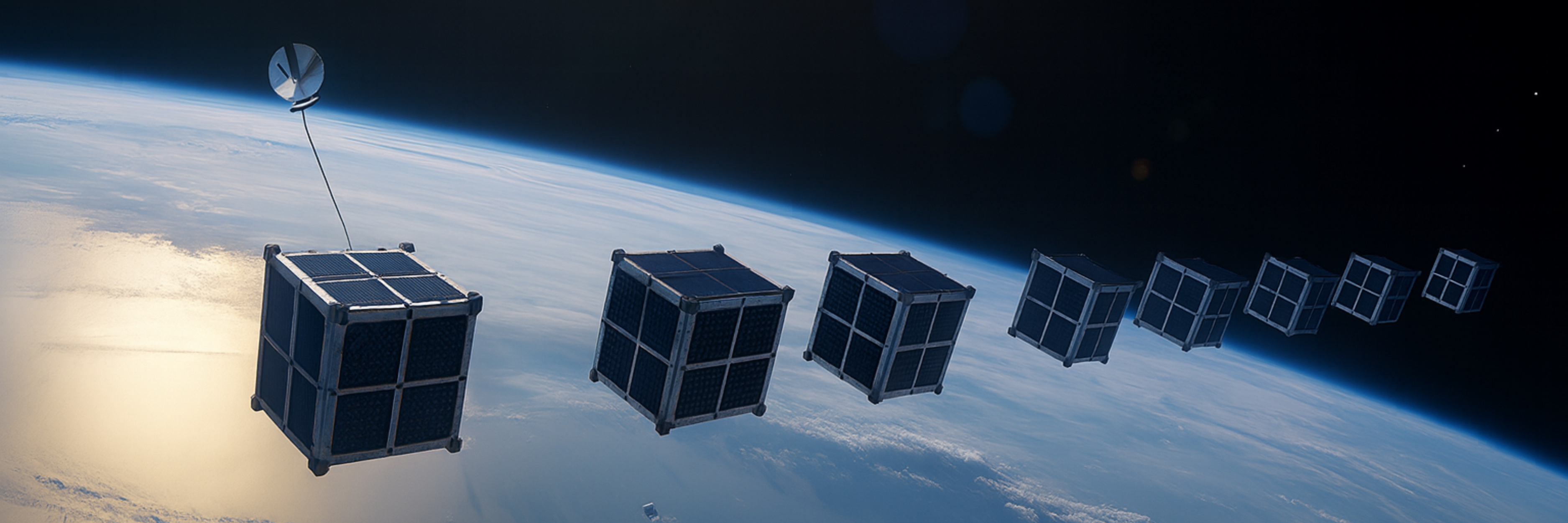
Nowhere is SWaP reduction in satellite systems more urgent than in the new space economy. From CubeSats to SmallSats, satellite designers are under pressure to maximize payload, bandwidth, and mission life—all while working within tighter size and power budgets.
Miniaturization Trends in CubeSats and SmallSats
IEH hyperboloid connectors are ideal for modern satellite platforms. Their compact form factor and modular layouts support the kind of dense PCB integration required in CubeSat electronics. These designs are already deployed in power distribution units, flight computers, and transceivers aboard orbital constellations.
Thermal and Electrical Efficiency at Scale
With reduced insertion force and contact resistance, hyperboloid connectors place less mechanical stress on solder joints and PCB traces. This improves heat management and long-term performance in vacuum environments where thermal dissipation is limited—critical in the compact architecture of today’s satellites.
Compact Connectors for UAVs and Avionics Platforms
Whether operating at low altitude or near the stratosphere, UAVs require compact connectors that balance high-performance demands with tight integration constraints.
Supporting Multi-Sensor Payloads in UAVs
From ISR drones to tactical quadcopters, UAVs increasingly carry diverse payloads: optical sensors, communications modules, and onboard AI processors. These payloads must be quickly swappable and efficiently connected—making high-density, low-profile connectors essential.
Vibration Resistance for Long-Endurance Flight
IEH hyperboloid connectors excel under dynamic conditions, with spring-finger geometry that maintains signal integrity through extended vibration and shock exposure. For long-endurance UAVs, this durability helps reduce mid-mission failure rates and increases overall system uptime.
High-Speed Data Connectors for Aircraft and Spacecraft
As digital systems proliferate across aerospace platforms, the demand for high-speed data connectors for aircraft and spacecraft has never been higher. From real-time telemetry to high-throughput avionics, connectors must support reliable, low-latency transmission across hostile environments.
Optimizing for Digital Backbones and Bandwidth
IEH’s hyperboloid designs support a range of high-speed protocols—including MIL-STD-1553, Ethernet, and proprietary serial buses. Their low impedance and stable contact resistance ensure consistent signal performance, even under thermal cycling or after hundreds of mating cycles.
EMI Performance and Power Efficiency
Robust shielding and contact uniformity reduce electromagnetic interference, allowing IEH connectors to maintain signal clarity in dense electronic environments. In aircraft and spacecraft where data volume is growing exponentially, this reliability translates into cleaner, faster communication across critical systems.
Built for Customization and Innovation
Standard off-the-shelf connectors often fall short in aerospace applications. Every mission has unique physical, electrical, and environmental challenges. That’s why IEH offers a broad range of custom options built on their core hyperboloid architecture.
Hybrid Signal-Power-RF Architecture
IEH engineers can design mixed-use connectors that consolidate power, high-speed data, and RF signals into a single lightweight interface. This reduces cable clutter, simplifies assembly, and minimizes overall system weight—critical for any application chasing aggressive SWaP targets.
Aerospace-Grade Materials and Overmolds
IEH connectors can be adapted to extreme mission profiles with ruggedized housings, environmental seals, and specialized overmolding for space-rated and flight-certified systems. This customization ensures compliance with MIL-DTL standards and other mission-specific protocols.
Trusted by Aerospace Engineers Across Missions
IEH hyperboloid connectors are already in service on a diverse range of aerospace systems:
- CubeSats and SmallSats: High-density connectors used in satellite bus electronics and payload integration.
- Tactical and long-endurance UAVs: Compact, high-cycle interconnects that survive in flight vibration zones.
- Launch vehicles and boosters: Rugged, low-profile connectors built to withstand the extreme forces of ascent.
- Crewed spacecraft: High-reliability signal connectors deployed in life-critical avionics and human-support systems.
Each deployment reflects IEH’s commitment to exceeding mission expectations through engineering excellence.
Future-Ready Connectors for Next-Gen Aerospace
The aerospace landscape is evolving fast—driven by commercial innovation, military modernization, and the pursuit of more efficient flight. Across all these domains, IEH’s hyperboloid connectors are helping engineers achieve radical SWaP reduction in satellite systems, deliver compact connectors for UAVs, and enable the next wave of high-speed data connectors for aircraft.
Through unmatched ruggedness, customization, and signal integrity, IEH remains a trusted partner for aerospace teams building the platforms of tomorrow.