
Connector Miniaturization in Defense Electronics: Balancing Power Density and Durability
Connector miniaturization enables compact defense systems without compromising ruggedness. Learn how IEH hyperboloid technology maintains reliability in miniaturized designs.
Dec 30, 2025
Key Takeaways:
- Miniaturized defense connectors enable smaller, lighter systems while maintaining ruggedness and current-carrying capacity required for mission-critical performance.
- Design tradeoffs include managing contact resistance, mating cycles, and EMI protection within increasingly compact form factors.
- Hyperboloid architecture enhances reliability in miniaturized designs through multiple lines of contact and low insertion force.
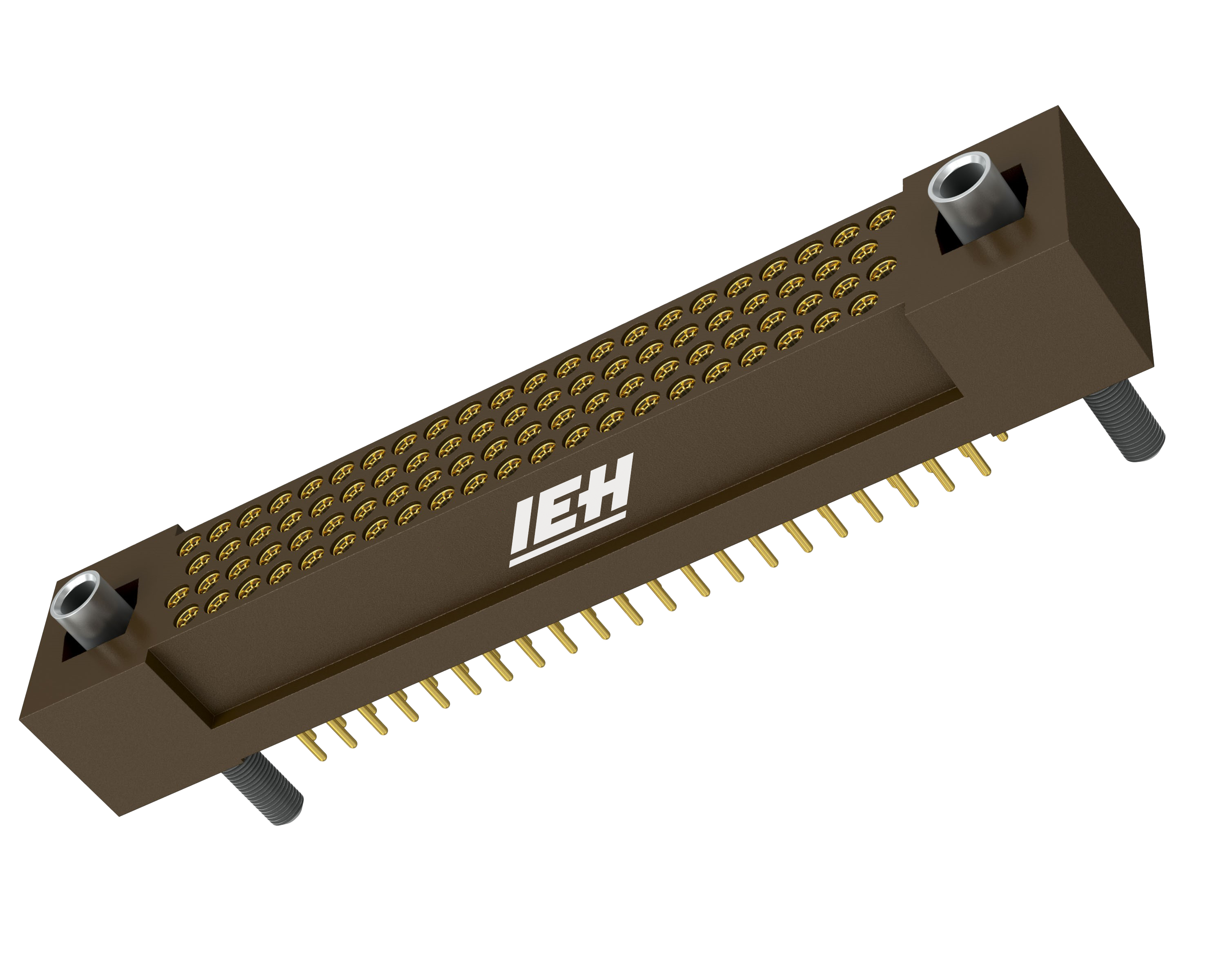
- IEH's U.S.-manufactured miniature connectors provide custom solutions that balance power density with proven durability for defense electronics.
Modern defense systems face an unrelenting drive toward miniaturization. From soldier-worn electronics and compact UAVs to space-constrained missile guidance systems, today’s military equipment must pack more capability into smaller packages while maintaining battlefield-ready durability. This push toward smaller, lighter designs creates unique challenges for electrical interconnects, which must continue to deliver reliable power and signal transmission in increasingly limited spaces.
The stakes are particularly high in defense applications where connector failure can compromise mission success and endanger lives. Engineers must navigate complex design tradeoffs between size reduction and performance preservation, ensuring that miniaturized connectors maintain the ruggedness, current-carrying capacity, and signal integrity demanded by military environments.
The Miniaturization Imperative in Defense Electronics
Weight and Space Constraints Drive Innovation
Defense electronics face critical size, weight, and power (SWaP) constraints where failure isn't just inconvenient, it's potentially catastrophic. Soldier-portable systems must minimize weight to reduce fatigue and improve mobility, while aircraft and vehicle electronics must maximize functionality within strict space and weight limits. These constraints create cascading effects throughout system design, making board real estate increasingly valuable and thermal management more challenging in confined spaces.
The pressure for miniaturization extends beyond simple size reduction. Modern military operations demand increased capability without proportional increases in system size or weight. This requirement drives innovation in connector technology, where traditional design approaches often conflict with emerging performance demands.
Performance Standards Remain Uncompromised
Despite aggressive size reduction goals, defense systems cannot compromise on fundamental performance requirements:
- Higher data rates for advanced sensor and communication systems
- Strong power density for processors and RF applications
- Enhanced signal integrity across multiple simultaneous channels
- Uncompromising reliability in hostile environments
This creates a fundamental tension between miniaturization goals and performance requirements that only advanced connector technology can resolve.
Design Tradeoffs in Miniaturized Defense Connectors
Contact Resistance vs. Size Reduction
As connectors shrink, maintaining consistently low contact resistance becomes one of the most challenging engineering problems. Smaller contact surfaces inherently have less area for current flow, which can increase resistance and heat generation. The challenge intensifies in power applications where high current flow through miniaturized contacts can create dangerous hot spots that damage nearby components.
Traditional approaches to reducing resistance face significant limitations in miniaturized designs:
- Increasing contact pressure - Limited by reduced spring mass in smaller contacts
- Using larger contact areas - Directly conflicts with miniaturization goals
- Employing specialized materials - Often increases cost and manufacturing complexity
Mating Cycle Durability in Compact Designs
Some military equipment undergoes frequent connection and disconnection cycles during maintenance, reconfiguration, and field operations. Conventional connector designs rely on spring force and material bulk to ensure reliable mating over thousands of cycles. As connectors shrink, maintaining adequate spring force becomes difficult while preventing excessive wear on delicate contact surfaces.
EMI Protection in High-Density Layouts
Electromagnetic interference (EMI) presents a growing challenge as component density and signal frequency rise. Miniaturized connectors must provide effective EMI shielding while occupying as little space as possible. The problem compounds when multiple high-frequency signals share proximity in dense connector layouts, where crosstalk between adjacent contacts can degrade signal integrity.
Traditional shielding approaches face space constraints:
- Bulky metal housings conflict with size reduction goals
- Complex grounding schemes require valuable board real estate
- Ferrite suppression adds unwanted bulk and weight
Hyperboloid Architecture: Enabling Reliable Miniaturization
Multiple Lines of Contact in Minimal Space
IEH’s hyperboloid contact system provides unique advantages for miniaturized defense applications. Unlike traditional pin-and-socket interfaces that rely on limited contact points, the precision-engineered wire basket design creates multiple, continuous contact lines between mating surfaces without requiring larger connector footprints. This distributed contact approach maintains low resistance and high current-carrying capacity even in extremely compact designs, while reducing current density within individual contacts to minimize heat generation and improve overall reliability.
The hyperboloid system achieves superior electrical performance through:
- Distributed current flow across multiple wire contact lines
- Reduced contact resistance compared to single-point designs
- Enhanced thermal management through distributed heat generation
Durability Through Intelligent Design
The hyperboloid's wire-cage structure provides exceptional durability in miniaturized applications. The flexible geometry adapts to mating variations while maintaining consistent spring force, unlike rigid contact designs that rely on bulk material for strength.
IEH's testing demonstrates that hyperboloid contacts achieve over 100,000 mating cycles even in miniature configurations. This durability comes from the gentle wire-on-pin contact mechanism that minimizes wear while maintaining consistent electrical performance throughout the connector's operational life.
Natural EMI Mitigation
The hyperboloid's wire-basket structure provides superior electrical stability that becomes particularly valuable in miniaturized applications where EMI protection is critical. The distributed contact geometry creates multiple parallel current paths that maintain consistent conductivity and reduce signal degradation, while the stable electrical interface supports compatibility with external shielding schemes required in defense electronics.
In high-frequency defense applications, this geometry offers controlled impedance through its consistent structure and reduced crosstalk potential. The design maintains stable signal transmission across temperature and vibration cycles while remaining compatible with external shielding schemes when additional EMI protection is required.
Applications Across Miniaturized Defense Systems
Soldier-Worn Electronics
Modern soldiers carry increasingly sophisticated electronic systems for communication, navigation, and situational awareness. These systems must be lightweight and compact while maintaining reliability under extreme field conditions. Weight reduction directly impacts mobility and endurance; connector miniaturization is a key enabler of next-generation soldier systems.
Unmanned Vehicle Systems
UAVs and ground robots require high-density electronics packages within space and weight-constrained platforms. Every gram and cubic centimeter matters in these applications, where payload capacity and flight time directly impact mission effectiveness.
Missile and Guidance Systems
Missile and guidance electronics represent one of the most demanding miniaturization challenges, requiring maximum functionality within stringent aerodynamic and spatial constraints. Connectors must perform flawlessly during extreme acceleration and vibration while occupying minimal space. The reliability requirements are absolute; there is no opportunity for repair or replacement once the system is deployed.
Engineered for durability, the hyperboloid contact system delivers exceptional shock and vibration resistance in high-stress applications.
Compact Communication and Radar Systems
Modern military communication and radar systems achieve increased capability through digital signal processing and advanced algorithms. These systems require high-density electronics with reliable, high-frequency interconnects that maintain signal integrity within compact, space-limited designs..
Miniaturized hyperboloid connectors support digital signal processing (DSP) boards with high-speed data paths, RF front-end electronics requiring controlled impedance, and power amplifier connections handling high current density. Control system interfaces must also maintain signal accuracy and timing precision while fitting within tightly packed assemblies.
U.S.-Based Engineering and Manufacturing Excellence
IEH's commitment to defense-grade connector reliability begins with American engineering and manufacturing capabilities. Our facilities in Brooklyn, NY, and Allentown, PA, provide end-to-end control over every stage of miniaturized connector production. This domestic approach delivers critical advantages that become even more important as connectors shrink and complexity increases.
Secure supply chains protect against international disruptions that could impact critical military programs. The specialized manufacturing capabilities required for miniaturized connectors make supply chain reliability essential, as alternative sourcing becomes more difficult when precise tolerances and advanced materials are required.
The Future of Miniaturized Defense Electronics
As defense electronics continue advancing toward greater miniaturization, connector technology must evolve to support emerging capabilities. The convergence of artificial intelligence, advanced sensors, and high-speed communication systems will create new demands for miniaturized interconnects that support high-speed data transmission while providing reliable power delivery in increasingly compact packages.
The proven durability, adaptability, and performance stability of hyperboloid technology provide a solid foundation for continued innovation while supporting the next generation of miniaturized defense electronics with confidence and reliability.
Collaborate with IEH for Custom Miniaturized Defense Solutions