Designing Connectors for High-G Environments
High-G launch and flight environments demand connectors that maintain electrical continuity under extreme acceleration. Learn how IEH designs and validates hyperboloid connectors for missiles, rockets, and deep-space systems.
Apr 01, 2026
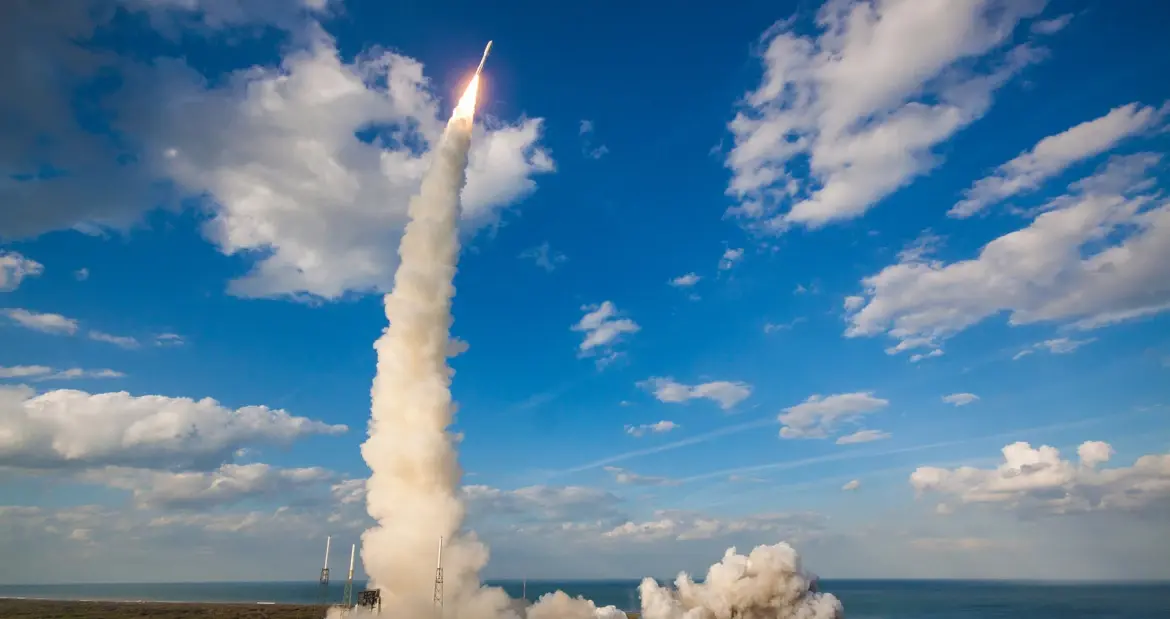
When a rocket leaves the pad or a missile clears its launcher, acceleration subjects every internal component to extreme mechanical forces. Forces climb far beyond what most electronic systems ever encounter, often reaching tens or hundreds of Gs within seconds. These loads do not act uniformly. Axial acceleration, lateral shock, vibration, and rapid thermal change occur simultaneously during launch events.
Within this environment, electrical connectors are expected to perform without interruption. There is no reset and no opportunity for recovery once the system is in motion.
Designing connectors for high-G environments is not about meeting nominal specifications. It is about maintaining electrical continuity when acceleration, inertia, and vibration are actively working against the interface.
Why High-G Environments Break Conventional Contacts
Under extreme acceleration, the primary challenge is inertia. As G-loads rise, the mass of the contact system becomes a liability. Pins attempt to shift relative to sockets, and conventional spring-based designs must resist that motion using limited normal force concentrated at a small number of contact locations.
That leads to predictable failure mechanisms:
- Momentary separation when acceleration exceeds spring retention force
- Micro-movement that accelerates wear, debris formation, and resistance growth
- Compounded stress as shock, vibration, and thermal transients, occurs simultaneously
Even brief discontinuities can disrupt guidance, control, or power distribution. In high-G systems, an intermittent connection is functionally equivalent to failure.
Designing for Acceleration, Not Against It
IEH approaches high-G connector design by reducing the forces that cause separation rather than attempting to overpower them. Hyperboloid contacts replace rigid spring interfaces with a low-mass, multi-wire geometry that moves with the mating pin instead of resisting its motion.
Instead of relying on a small number of contact points, hyperboloid designs establish multiple continuous lines of contact around the pin. This architecture distributes mechanical load, reduces localized stress, and maintains electrical engagement regardless of acceleration direction.
Because the individual wires have extremely low inertia, they remain engaged even as the pin experiences rapid motion. The result is electrical continuity that persists through acceleration events that defeat traditional contact systems.
IEH hyperboloid contacts have been validated beyond 300 G without signal discontinuity, consistent with the company’s focus on engineering beyond minimum qualification requirements.
Validation Through Realistic Testing
High-G performance cannot be assumed. It must be demonstrated under conditions that reflect actual mission profiles.
IEH testing replicates combined shock, vibration, and acceleration environments representative of launch vehicles, missile systems, and interceptors. These tests are designed to expose failure modes that do not appear in static or low-stress qualification regimes.
This validation philosophy reflects a simple reality. If a connector only works in isolation, it is not ready for flight. High-G environments punish interfaces that rely on ideal alignment, controlled mating forces, or benign operating conditions.
IEH Space Heritage
IEH hyperboloid connectors have supported space missions for more than six decades, beginning with the Apollo Lunar Module and continuing through today’s deep space exploration programs. Across these missions, the requirement remains unchanged. Connectors must survive launch G-forces and then operate reliably for years or decades without maintenance.
Launch systems place extreme mechanical stress on interconnects during ascent. IEH connectors have flown on platforms such as Atlas and Vulcan launch vehicles, the Starliner crew capsule, the Dream Chaser space plane, and the X-37B orbital test vehicle. In each case, connectors are subjected to intense acceleration and vibration before ever reaching orbit.
Deep space missions extend the challenge beyond launch. Systems such as the NASA Psyche asteroid mission, Europa Clipper, Mars Sample Return Lander, and Orion deep space capsule require connectors that maintain stable performance across long mission durations, radiation exposure, and wide thermal cycles. For Psyche, IEH HMM Series connectors support mission-critical data transmission where signal loss is not acceptable.
Space observatories introduce additional constraints. The Hubble Space Telescope, James Webb Space Telescope, and Nancy Grace Roman Space Telescope rely on connectors that must perform flawlessly after surviving launch and deployment. IEH HRM Series connectors enable the James Webb Near Infrared Camera, while HGM Series connectors support the Roman Space Telescope.
Satellite and orbital systems present a similar profile. GPS navigation satellites, military reconnaissance platforms, the International Space Station, and OneSat communications satellites all depend on interconnects that cannot degrade over time. In high-data-rate platforms like OneSat, IEH HKC, and HKX Series connectors support data rates exceeding 10 Gbps while retaining high-G survivability.
IEH Defense Applications: Missiles and Guidance Systems
Missile and interceptor systems represent some of the most demanding applications for interconnect technology. Reliability is non-negotiable. Once launched, there is no opportunity for repair or adjustment.
Hyperboloid connectors maintain conductivity under the extreme acceleration and vibration of launch while supporting the high-density packaging required in guidance and control electronics. Space and weight margins are minimal, and connector performance must be consistent across all axes of motion.
Verified defense applications include Patriot missile systems, electronic airborne warfare platforms, torpedo guidance systems, and munitions electronics, where high reliability must coexist with dense layouts in confined volumes.
IEH has developed custom connector solutions specifically for these environments. Semi-circular stacking connectors support parallel boards inside munitions chambers. Circular-edge connector designs accommodate torpedo guidance sections where geometry is dictated by the weapon envelope rather than the electronics.
These solutions are engineered around real deployment conditions, not laboratory assumptions.
Rotary-Wing and Fighter Aircraft Environments
High-G stress does not exist only at launch. Rotary-wing and fighter aircraft introduce sustained vibration, shock, and thermal exposure that push connectors to their limits over long service lives.
Platforms such as the Apache AH-64, V-280 Valor, and SH-60 Seahawk use IEH hyperboloid contacts in on-engine and high-vibration applications where industry-standard sockets have proven unreliable. In these environments, connectors must endure continuous excitation rather than brief events.
The F-35 Joint Strike Fighter engine startup system illustrates this challenge clearly. Traditional mil-spec connectors could not meet the current and vibration requirements within the available space. IEH HSC 3570 hyperboloid contacts delivered the required performance without increasing connector size or compromising system layout.
Materials That Support the Physics
Contact geometry alone is not enough. High-G environments are often paired with severe temperature exposure, radiation, and chemical byproducts.
IEH material selection accounts for:
- Wide thermal cycling from cryogenic conditions to elevated operating temperatures
- Resistance to vibration-induced fatigue and fretting
- Material stability in environments where contamination or outgassing cannot be tolerated
Material processing and qualification are aligned with the same philosophy as contact design. Survivability must extend beyond initial launch or deployment.
The Engineering Decision That Matters
Selecting connectors for high-G environments is not about checking a box on a datasheet. It is about choosing a contact system proven to maintain continuity when acceleration, vibration, and shock are unavoidable.
Validated performance beyond 300 Gs. Six decades of spaceflight heritage. Proven use in missile, interceptor, and flight-critical defense platforms.
That is the difference between a connector that qualifies on paper and one that performs when the system leaves the ground.
Have a high-G application where electrical continuity cannot be compromised?
Contact IEH’s engineering team to discuss your requirements and explore connector solutions engineered for extreme acceleration environments.
Contact our engineering team to discuss your requirements.