
Understanding QPL (Qualified Parts List)
Explore how QPL certification ensures connector reliability in defense, aerospace, and space—and why engineers trust IEH for mission-critical performance.
Sep 08, 2025
Understanding QPL (Qualified Parts List)
Reliability isn’t optional in high-stakes industries like defense, aerospace, and space exploration, it’s mission-critical. That’s where QPL (Qualified Parts List) certification comes in. This formal designation ensures that parts meet strict military specifications and have been rigorously tested for consistency and performance. For engineers and procurement teams, QPL certification simplifies the sourcing process by signaling that a component is trusted, tested, and ready for deployment in the most demanding environments.
QPL certification is a cornerstone of quality assurance for government and military projects. It ensures that only approved manufacturers and vetted components are used in systems where failure is not an option. These parts are evaluated for uniformity, reliability, and high performance, making QPL a critical benchmark in procurement decisions.
How the QPL Certification Process Works
To obtain QPL certification, manufacturers must produce components to exacting military specifications and invest in specialized tooling. Parts are submitted to the Defense Logistics Agency (DLA) for comprehensive testing. Once approved, manufacturers must repeat this process every five years for requalification. This system ensures that certified parts remain dependable and up to date with evolving standards.
Industries That Depend on QPL-Certified Parts
Industries like defense, aerospace, and space exploration depend heavily on QPL-certified components due to their critical reliability and safety requirements. In contrast, the medical industry, while equally demanding in terms of quality, typically follows FDA certification standards and does not require QPL certification.
IEH’s Role in QPL-Certified Connector Manufacturing
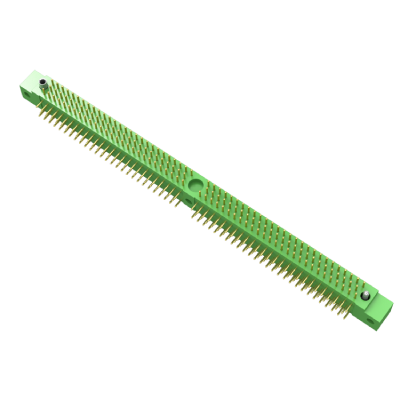
IEH plays a significant role in supplying QPL-certified PCB connectors qualified under the MIL-DTL-55302 standard. The HGM and HRM series are primarily QPL-certified and serve key military and aerospace applications. Although the HMM series is IEH’s best-selling line and there is no QPL listing for connectors with this size and pitch, since it employs the same materials and processes in its assembly, it is qualified by similarity, meaning it performs to the same high standard and is trusted by engineers worldwide.
Performance Standards for QPL-Certified Parts
To qualify as QPL-certified, components must meet strict criteria, including tight dimensional tolerances, precise insertion and extraction forces, low contact resistance, high current capacity, reliable dielectric withstanding voltage, and exceptional durability. These rigorous benchmarks ensure certified components can perform reliably under extreme conditions, from battlefield environments to high-altitude flight.
At IEH, these standards are not just met, they are often exceeded. IEH engineering teams prioritize performance, and many of our parts deliver higher current capacity and longer life spans than required, reinforcing the trust our clients place in us across the defense and aerospace sectors.
Testing Requirements for QPL Certification
QPL certification sends a strong message: these parts meet military-grade standards and can be trusted to perform. For engineers and procurement specialists, this assurance translates to confidence, knowing the components they choose will deliver under pressure, from defense platforms to high-reliability industrial systems.
The QPL certification process includes a robust set of tests divided into three categories:
- Group A: Verifies dimensional accuracy and physical conformity.
- Group B: Tests electrical and mechanical properties, including insertion/extraction force and contact resistance.
- Group C: Subjects parts to harsh environmental conditions, such as vibration, humidity, and temperature extremes, to ensure real-world resilience.
Mission-Critical Confidence Through QPL
QPL is widely acknowledged as one of the most rigorous and reliable standards for component quality. Engineers and technical decision-makers understand its value and view it as a baseline requirement for high-stakes applications.
When systems absolutely cannot fail, QPL-certified components provide assurance that every connector has been rigorously tested and proven under the most demanding conditions. This certification offers engineers peace of mind and mitigates the risk of performance issues in the field.
The Value of QPL—and Consistent Quality Across the Board
While not every IEH connector is formally QPL-certified, many are—and that matters. Our long-standing presence on the Qualified Parts List reflects our ability to meet the most demanding military standards. Just as importantly, the same rigorous quality, engineering precision, and manufacturing consistency that go into our QPL-certified products are applied across our entire portfolio.
For defense and aerospace clients, this gives procurement teams confidence. Parts that are QPL-certified can simplify sourcing and streamline project timelines by reducing the need for additional testing. And even when QPL is not required, customers continue to choose IEH based on a proven track record of reliability in mission-critical environments.
Stability of Standards and the Future of IEH's QPL Offerings
QPL certification remains a stable and well-defined process, with no recent changes impacting manufacturers like IEH. This consistency benefits suppliers and procurement teams, allowing for reliable planning, standardized evaluations, and smooth qualification cycles.
Time and again, clients choose IEH’s Hyperboloid technology for its proven reliability in mission-critical environments, even in the absence of formal QPL listing. For these engineers and project managers, the results speak louder than a certification alone.
Looking for connectors you can count on? Contact IEH today to learn more about our QPL-certified products and mission-critical solutions.