The Overlooked Reliability Challenge in AI-Enabled Medical Devices
Signal disruption, latency, and intermittent connections at the interconnect level directly affect AI system performance in medical devices. Here is what engineers need to consider.
May 15, 2026
The Overlooked Reliability Challenge in AI-Enabled Medical Devices
When an AI-enabled medical device produces an unexpected result, investigations tend to follow a familiar path: review the algorithm, audit the training data, check the sensor calibration. Rarely does anyone start at the connector.
Signal chain integrity is not a new concern for medical device engineers. What changes with AI-based systems is the nature of the failure. A conventional device fails visibly. An AI-driven system can fail quietly, producing outputs that look valid while the physical layer beneath them has already drifted. When signal quality degrades at the interconnect level, the algorithm typically has no mechanism to distinguish clean data from degraded data at the physical layer. The cause is physical. The consequence appears in software. It processes what arrives. The problem is physical, but its consequences appear in software, where they are harder to detect.
Why AI-Enabled Devices Are More Sensitive to Interconnect Issues Than Conventional Ones
A conventional medical device operates within defined signal thresholds. A reading outside the acceptable range triggers an alert. The failure mode is visible. An AI-enabled device works differently. It draws inference from signal relationships sustained over time, not from whether a single reading crosses a defined threshold.
That capability is precisely what makes it more sensitive to gradual signal degradation. A slow increase in contact resistance registers as data drift. The model processes it as real input. The device keeps running. The outputs keep coming. But the model is no longer working from the data the sensor intended to deliver.
Three primary interconnect failure modes contribute to this risk:
Fretting corrosion. Micro-motion at the contact interface, the kind that comes with routine clinical handling and platform vibration, generates abrasive wear particles that oxidize rapidly. Contact resistance rises in small increments. The connection remains intact, but signal quality degrades with each cycle.
Micro-arcing. Inconsistent contact pressure allows microscopic electrical arcs between mating surfaces. These arcs leave pitting and carbon deposits that increase resistance over time and introduce intermittent connection behavior that worsens progressively.
Surface oxidation. Repeated sterilization exposes contact materials to chemical sterilants and humidity that accelerate surface degradation. Resistance climbs with each sterilization cycle, and the electrical stability the AI system depends on erodes with it.
None of these produce a hard fault at first occurrence. All of them introduce data quality problems that accumulate without triggering any alert.
How Signal Degradation Appears Across Device Types
A conventional device displaying a corrupted reading produces an obvious error. The output is flagged. The clinician knows to disregard it. An AI system receiving degraded data may produce a result that looks well-formed and confident, because the model typically has no visibility into the condition of the data entering it. The output appears valid. Nothing marks it as suspect. When that goes undetected long enough, it becomes a field issue, a complaint attributed to software that is actually a hardware problem, with no clean path back to root cause.
In practice, this manifests differently depending on device type:
- Diagnostic imaging systems depend on stable, low-noise signal transmission between detector elements and the reconstruction processor. Resistance instability along that path introduces variations that the AI may interpret as real tissue characteristics, affecting the accuracy of the reconstructed image.
- Continuous monitoring platforms rely on uninterrupted data streams to identify clinical trends and flag changes over time. Intermittent connections create gaps and timestamp errors that compromise trend accuracy, and the model may generate inference from incomplete data without any indication that the underlying signal was disrupted.
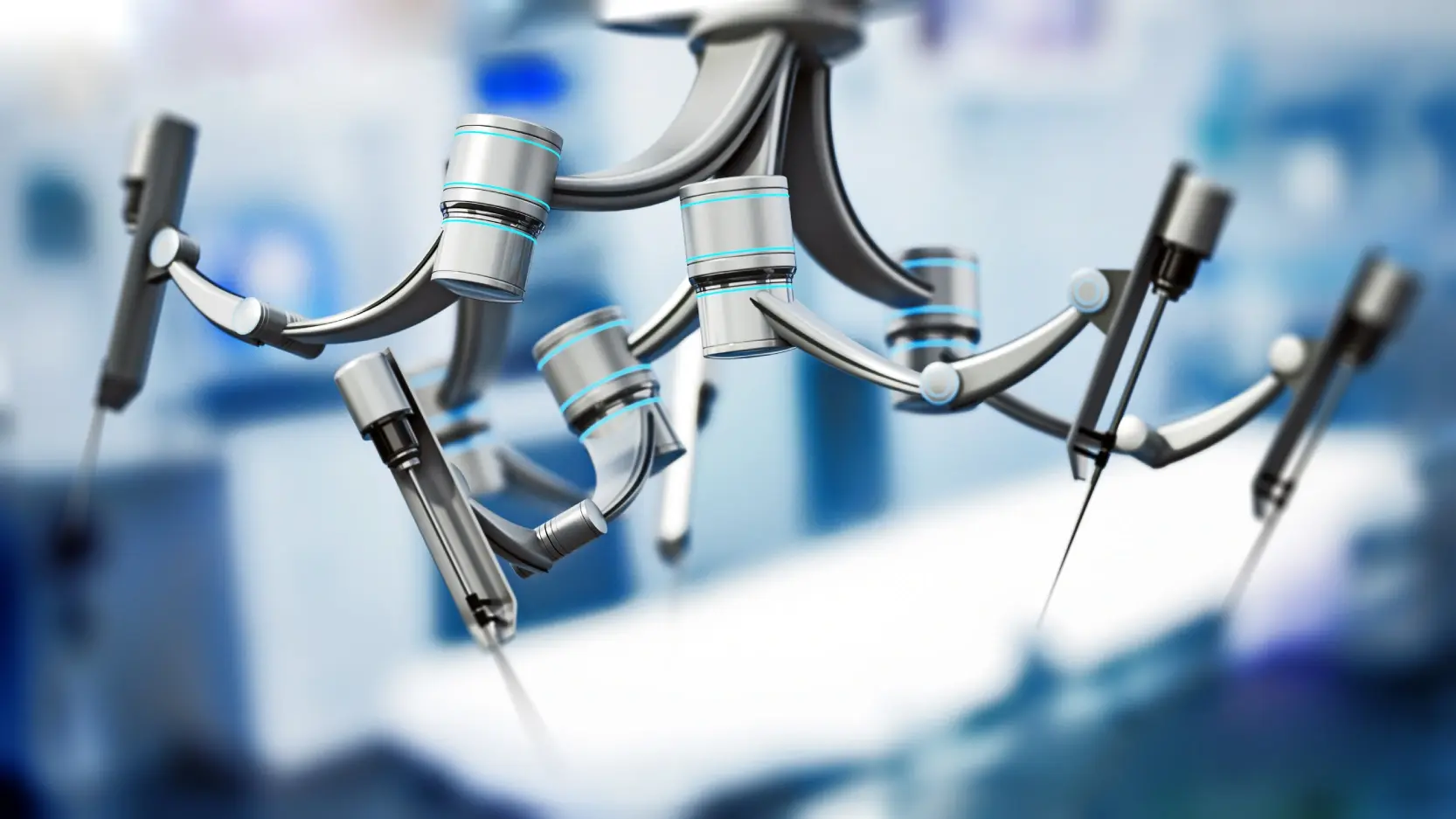
- Surgical robotics systems depend on real-time sensor feedback to guide control inputs with precision. Signal latency or dropout in that feedback path means the control system is acting on stale or incomplete positional and force data.
- Wearable cardiac and biosignal devices are particularly exposed to this risk. ECG data is prone to noise from poor electrode contact and movement artifacts, and that noise directly degrades the performance of AI-based arrhythmia detection and biosignal analysis.
The common thread across all of these is signal chain integrity from sensor to processor. Every interconnect in that path is a point where the data quality the AI depends on and overall medical connector reliability can be compromised.
The Specification Gap That Creates Risk
Most AI-enabled medical device programs apply rigorous standards to algorithm validation. Training data is audited, model performance is characterised across edge cases, and the full preprocessing pipeline is tested before the algorithm is considered validated. The interconnect, by comparison, is often specified at component level during early design and not always revisited as a contributor to system-level AI performance.
The reason is structural. The interconnect does not appear in algorithm validation frameworks. It is not part of software design reviews. It receives component-level attention during procurement and early design, but system-level scrutiny, the kind applied to the data pipeline above it, rarely extends down to the contact interface. That gap is where the risk accumulates.
A connector that passes initial testing may behave differently after years of clinical service, where sterilization cycles, platform vibration, and repeated handling accumulate in ways that qualification testing cannot fully model. By the time contact resistance has risen enough to affect signal quality at the system level, root cause analysis is difficult. The symptom presents as AI performance inconsistency. The investigation follows the software and sensor path. The connector is rarely the first place anyone looks. When it is eventually identified, the program is often post-clearance, with limited options for correction.
Addressing these questions in design review is faster and less costly than discovering them post-clearance:
- What is the acceptable contact resistance specification, and how much variation is tolerable across the device's full service life?
- How has the interconnect been characterised following the actual sterilization protocols the device will undergo in clinical use?
- What is the contact interface behavior under the vibration and handling profile of the specific platform?
- How does the contact geometry address fretting corrosion in applications involving frequent connection and disconnection cycles?
What the Contact Interface Needs to Deliver
For AI-enabled medical devices, interconnect reliability means consistent electrical performance across the full operating life of the device, under the conditions the device will actually face.
IEH hyperboloid contacts are engineered around that requirement. The wire basket design creates multiple continuous line contact paths around the mating pin, distributing electrical load across many wire-to-pin lines rather than concentrating it at a single interface. FFor a system where a slow drift in contact resistance can look like a shifting dataset rather than a hardware problem, that consistency is the physical foundation the AI system above it depends on.
The geometry also provides redundancy at the contact level. If micro-motion disturbs one contact line momentarily, others remain engaged. This is the same micro-motion that drives fretting corrosion in clinical environments with repeated handling and sterilization. The design addresses it not by eliminating motion, but by maintaining contact integrity through it.
The continuously burnishing action of the wire basket works in the same direction. As contact surfaces move relative to each other, the design cleans the interface rather than allowing oxide buildup to accumulate, directly countering the surface oxidation mechanism that sterilization cycles accelerate. For devices reconnected throughout their clinical life, that behavior matters across every cycle.
Very low insertion force (VLIF), under one ounce per contact for common contact sizes, protects the PCB assemblies inside compact medical platforms during assembly and servicing. The 100,000+ mating cycle rating is sized to the actual duty cycle of a device that gets serviced, sterilized, and reconnected across years of clinical use.
IEH designs and manufactures these contacts at U.S.-based facilities in Brooklyn, NY and Allentown, PA, maintaining direct control over materials, tooling, and production at every stage. For programs that need to validate and document interconnect performance as part of a design history file or regulatory submission, IEH engineering teams work directly with development programs through qualification.
Building the Signal Foundation AI Systems Require
AI-enabled medical devices are moving into more demanding clinical environments, with more complex sensor chains and more sophisticated inference at every stage. The interconnect is not getting simpler.As these devices move into more demanding clinical environments, the interconnect becomes more consequential. Signal paths grow longer, data dependencies tighten, and when physical layer degradation finally shows up, it shows up as model behavior rather than a hardware fault that anyone recognizes immediately.
The specification discipline around the interconnect needs to keep pace with the systems it supports. Signal disruption and intermittent connections at the contact interface are predictable outcomes of clinical service. Sterilization, vibration, and years of repeated handling do not spare the connector. Designing against them is a foundational requirement for any device whose performance is defined by the quality of what it measures.
Design interconnects with the same rigor applied to data integrity and system performance. The trustworthiness of the AI depends on what happens at the contact interface.
Contact IEH to discuss interconnect requirements for your AI-enabled medical platform: www.iehcorp.com/medical-applications